

Filtration for Drinking Water or Industrial Water
Your source water is unique. Your filtration solution should be, too.
Surface water, groundwater, and industrial process streams need different treatment trains. The wrong spec costs you twice. Fougner helps municipal and industrial teams across Minnesota, Montana, North Dakota, South Dakota, and Wyoming compare gravity, pressure, and membrane filtration from trusted manufacturers. Send your flow, source water, and quality targets. We will help you narrow the field before you commit to equipment.
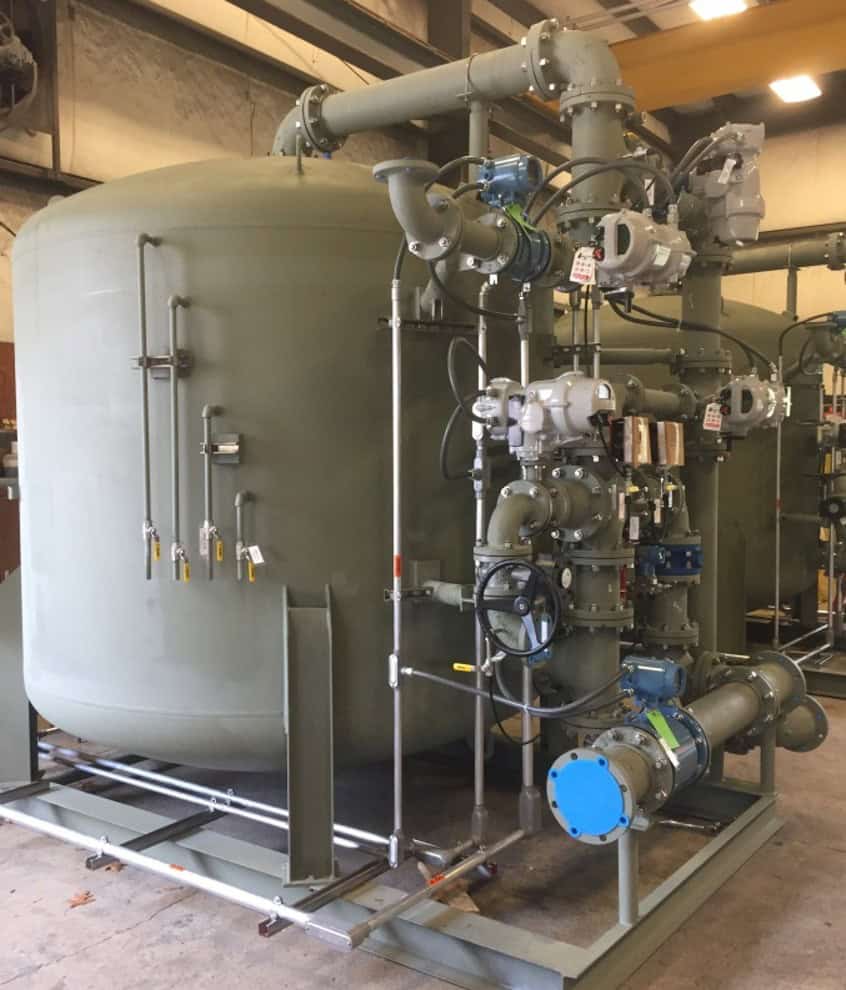
Filtration for Drinking Water and Industrial Process Water
Fougner is an equipment representative, not a single manufacturer. That means we can walk you through gravity filters, pressure vessels, membrane skids, and pretreatment strainers from several lines and help you write a spec that fits your plant.
On this page you will find how each filtration type fits in a treatment train, when to use it, and how we support specification and procurement across the Upper Midwest.
- Drinking water vs. industrial water treatment goals
- Why filtration matters for turbidity, metals, and compliance
- Municipal, power, food, and oil & gas applications
- Engineering and specification support from Fougner
- Gravity filters (detailed guide)
- Request a consultation for your project
Have a set of drawings or a water analysis in hand? Send them when you reach out. That is the fastest way to get useful options back.
Filtration Options for Potable and Industrial Water
Filtration removes suspended solids and, depending on the technology, dissolved metals or salts from raw water before disinfection, distribution, or process use. Most plants use more than one step: intake screening, straining, media filtration, and sometimes membranes. The sections below cover the main equipment categories Fougner represents for water treatment.
Gravity Filters
Gravity filters operate at atmospheric pressure in open basins or enclosed vessels. They handle high flows with relatively low energy use and long media life, which is why they remain standard at many municipal drinking water plants. Fougner represents Roberts Filter Group and other gravity filtration lines for greenfield builds, packaged plants, underdrain retrofits, and media upgrades.
- Municipal surface water, river, lake, and reservoir supplies
- Single, dual, and multimedia beds for turbidity removal
- Large capacity with room to add filter cells as demand grows
- Low operating cost compared to pressurized or membrane trains
See our full gravity filtration guide for applications, media types, underdrain options, and Roberts Filter Group product lines.
Pressure Filters
Pressure filters run inside closed vessels, often at well sites, small municipal plants, or industrial facilities where space is tight or a filter building is not practical. Fougner represents Hungerford & Terry, with more than 13,000 installations over 115 years.
Common Applications
- Groundwater wells with iron or manganese
- Arsenic, radium, and hydrogen sulfide removal
- Industrial boiler makeup and process water
- Small municipal and community water systems
Configurations
- Vertical and horizontal pressure vessels
- Plug-and-play Greensand Plus systems
- Ion exchange for nitrates, hardness, and color
- Degasification for CO2, ammonia, and oxygen
Why Plants Choose Pressure
- Smaller footprint than open gravity basins
- No dedicated filter gallery required in many cases
- Greensand media lineage from the patent holder
- Backwash reclaim and air scour options available
Membrane Filtration
When finished water must meet tight particulate or dissolved-solids limits, membranes step in. Fougner represents UET Water for microfiltration (MF), ultrafiltration (UF), and reverse osmosis (RO), including container-mounted skids and SCADA-ready controls.
MF and UF
- Particulate and pathogen barrier after pretreatment
- Industrial RO pretreatment and reuse projects
- Skid-mounted or containerized packages
RO and Reuse
- Dissolved salt and TDS reduction
- MBR and MBBR for wastewater minimization
- High-purity needs for power, pharma, and semiconductor
Pretreatment and Intake Filtration
Downstream filters last longer when raw water is screened and strained first. Fougner lines for this stage include:
- Astec Norris Screen (ELGIN): run-of-river intake screens, Coanda and side-hill designs, fish-safe cylindrical screens, and biofouling coatings
- Hellan Fluid Strainers: self-cleaning strainers that discharge solids without basket removal; filtration down to 40 microns on suction diffusers
- Clear Stream Environmental: disc filters and walnut shell filters for oil and suspended solids in water and wastewater applications
Not sure which approach fits your source water? Tell us what you are pulling from and what the finished water spec requires.
Filtration Comparison
Gravity filters suit high-volume municipal plants with room for basins. Pressure filters fit wells, tight sites, and metals removal in a vessel. Membranes address dissolved solids and tight reuse standards but carry higher capital and energy cost. Most projects start with raw water quality and finished water limits, then narrow to one or two technologies.
| Feature | Gravity Filters | Pressure Filters | Membranes |
|---|---|---|---|
| Primary Use | Large municipal surface water plants | Wells, small systems, metals removal | High-purity, reuse, RO applications |
| Operating Pressure | Atmospheric | Pressurized vessel | High pressure (RO) |
| Typical Turbidity Removal | Excellent with multimedia beds | Excellent; greensand for metals | Excellent (MF/UF); RO for dissolved salts |
| Dissolved Salt Removal | No | Limited (ion exchange only) | Yes with RO |
| Building Required | Usually (filter gallery or enclosed basin) | Often no dedicated building | Usually (skid housing or plant room) |
| Energy Use | Low (mainly backwash pumps) | Moderate | Highest |
| Capital Cost | Moderate; scales with cell count | Moderate per vessel | Highest |
| Typical Fougner Lines | Roberts Filter Group | Hungerford & Terry | UET Water |
Still comparing options? Send your flow rate and water analysis. We will point you toward the technology that matches your site.
Our service is legendary
Our job is to make your job easier. Just ask our customers!

“Mark Fougner is my EASY BUTTON. He makes it so easy to get projects done. Wish I could work with him on all my projects.”
— Power Plant Planner
“Looks like you nailed it! We’ve been trying to get this from [other] estimators for over a month now.”
— Project Manager in Oil & Gas
This quote was completed in less than a day with Fougner Solutions
“I cannot overstate how pleased we have been with his involvement related to our Fougner drive products”
— Paper Mill in MN
“thanks for such quick review and resolve!”
— Planner & Buyer
“I have you on my speed dial”
— Maintenance Superintendent
How Fougner Supports Your Project
Fougner does not manufacture filtration equipment. We represent Roberts Filter Group, Hungerford & Terry, UET Water, Hellan Fluid Strainers, Clear Stream Environmental, Astec Norris Screen, and other lines across Minnesota, Montana, North Dakota, South Dakota, and Wyoming. Our job is to help you compare those options honestly and get the right gear on order.
- Review your source water, flow, and finished water requirements
- Shortlist gravity, pressure, membrane, or pretreatment technologies that fit
- Support specification, quoting, and procurement with the OEM
- Coordinate with your contractor, installer, or manufacturer technical staff
- Source consumables and spare parts (membranes, cartridges, media) when needed
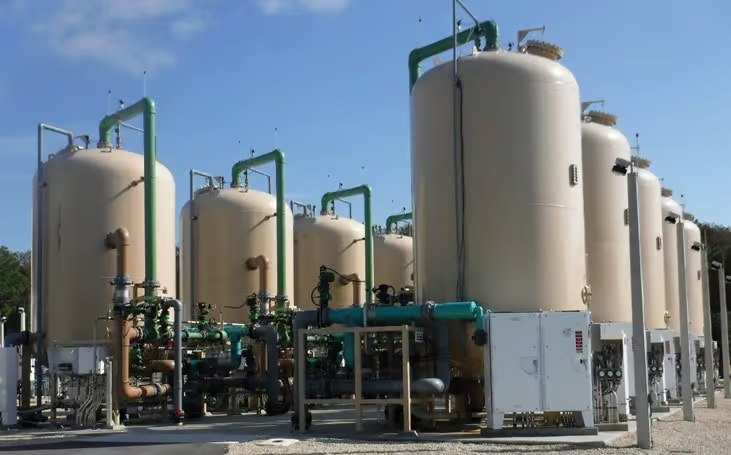
How to Choose the Right Filtration System
Equipment selection starts with water chemistry and ends with what your operators can maintain day to day. Use this list as a starting point before you lock in a spec.
- Characterize source water: turbidity, metals, organics, temperature, and variability
- Define finished water targets (SDWA limits, permit discharge, or process spec)
- Size for peak flow, redundancy, and future expansion
- Account for site constraints: filter building, headroom, existing basins, access
- Plan backwash, reject, and reclaim water handling
- Compare operating cost: energy, media replacement, membrane life, labor
- Work with Fougner to align specs across multiple manufacturer lines before you buy
Technical Specifications
Ranges vary by manufacturer and application. Contact Fougner with your project details for line-specific data.
| Specification | Typical Range / Notes |
|---|---|
| Design flow | Small well stations through large regional municipal trains; project-specific |
| Turbidity removal | Conventional media: excellent for suspended solids; RO for dissolved salts |
| Common contaminants | Iron, manganese, arsenic, H2S (pressure/greensand); particulates (gravity, strainers) |
| Materials of construction | Stainless steel, coated carbon steel, FRP, PVC underdrains |
| Backwash / air scour | Gravity and pressure media filters; air scour retrofit available (Roberts Aries) |
| Controls / integration | PLC and SCADA-ready skids (UET, packaged plants) |
| Footprint | Open gravity basins vs. compact pressure vessels vs. membrane skids |
Frequently Asked Questions
What is the difference between gravity and pressure filters?
Gravity filters operate at atmospheric pressure in open or enclosed basins and handle very large municipal flows with low energy use. Pressure filters run inside closed vessels, often at well sites or industrial plants where footprint is limited. Both use media beds; neither removes dissolved salts like RO does.
When do I need membrane filtration instead of media filters?
Media filters handle turbidity and many metals well. Membranes (MF, UF, RO) are specified when particulate limits are very tight, when you need dissolved solids removed, or when reuse standards require it. Pretreatment strainers and media filters often sit upstream of membranes to protect them.
How do I size a filtration system for my plant?
Sizing depends on peak and average flow, raw water quality, finished water limits, redundancy requirements, and available space. Fougner can review your data and connect you with manufacturer application engineers for loading rates and vessel counts.
Does Fougner install filtration equipment?
No. Fougner represents manufacturers and supports specification, quoting, and sourcing. Your contractor, installer, or the OEM service group typically handles installation. We can help coordinate technical questions during construction.
Which manufacturers does Fougner represent for water filtration?
For filtration and related pretreatment, Fougner represents Roberts Filter Group (gravity), Hungerford & Terry (pressure, ion exchange, degasification), UET Water (membranes), Hellan Fluid Strainers, Clear Stream Environmental, and Astec Norris Screen (intake). Territory varies by line; contact us for current coverage in your state.
Where can I learn more about gravity filters specifically?
See our Gravity Filters solution page for applications, media types, underdrain systems, and Roberts Filter Group product details.
Related Solutions and Resources
Continue exploring filtration options and the manufacturers Fougner represents in your area.