

Gravity Filters
Proven gravity filtration for municipal plants that need capacity, clarity, and room to grow.
Gravity filters are still the workhorse of drinking water treatment: low operating cost, high throughput, and decades of field-proven performance. Fougner represents Roberts Filter Group and other gravity filtration lines across the Upper Midwest, from greenfield installs and packaged plants to underdrain retrofits and media upgrades. Tell us about your basin, source water, and expansion plans.
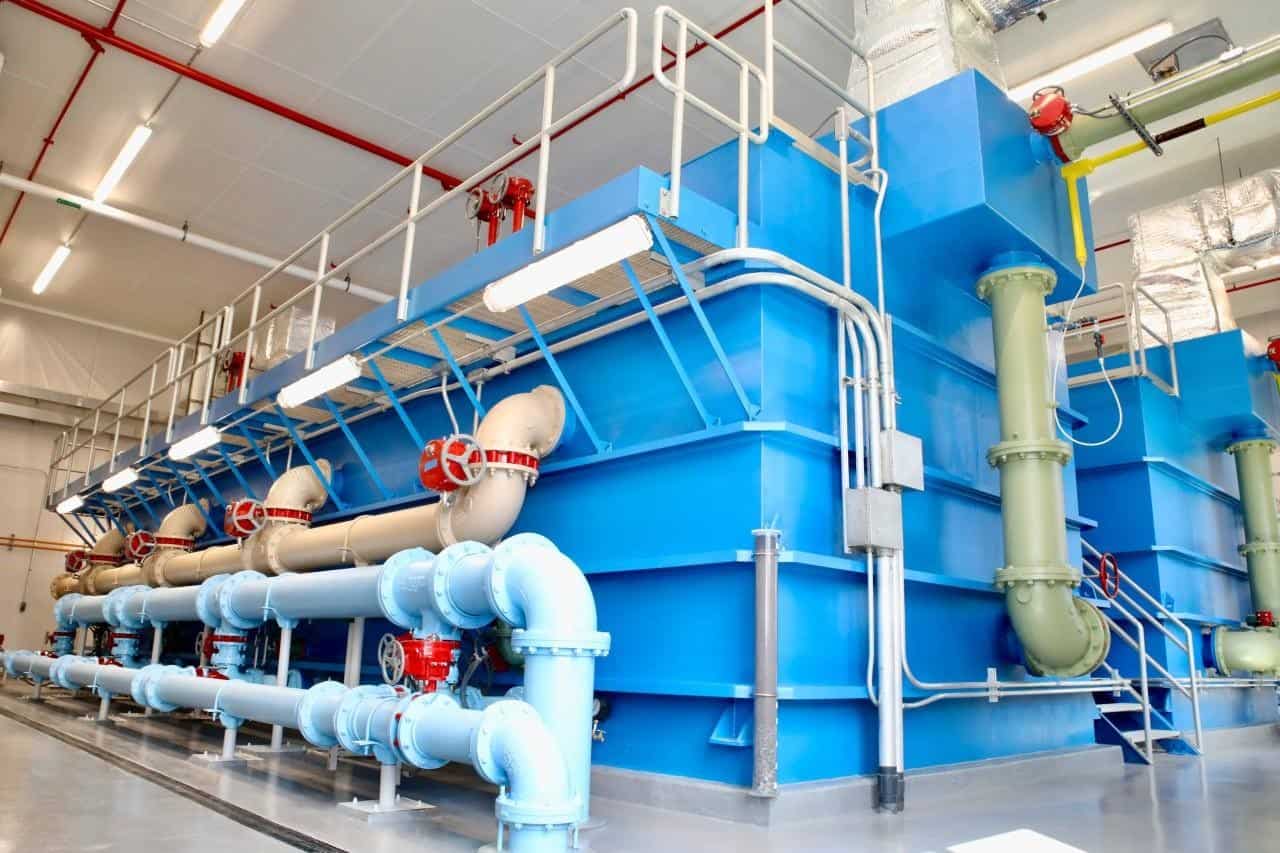
Gravity Filtration for Drinking Water Treatment
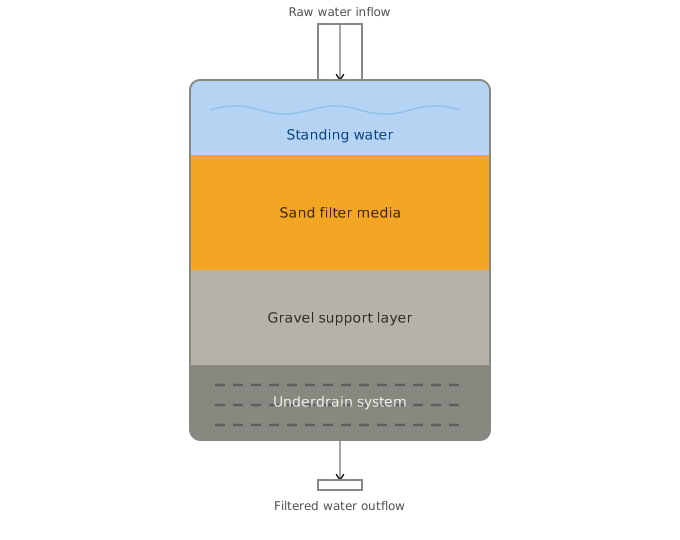
Gravity filters pass water downward through a media bed at atmospheric pressure. Solids collect in the bed; periodic backwash cleans the media and restores headloss capacity. The technology is standard at municipal plants treating river, lake, and reservoir water across the Upper Midwest.
This page covers how gravity filtration works, typical configurations, and the product lines Fougner represents. For pressure filters, membranes, and intake pretreatment, see our filtration overview.
- How gravity filters fit in a treatment train
- Applications and media configurations
- Underdrain and air scour options
- Roberts Filter Group greenfield and rehab systems
- Packaged plants for smaller communities
- Specification support from Fougner
How Gravity Filtration Works
After coagulation and clarification (or direct filtration where applicable), water enters the top of a filter cell and moves down through anthracite, sand, garnet, or other media. The underdrain collects filtered water and distributes backwash air and water when the bed needs cleaning. Because the system runs at atmospheric pressure, energy use stays low compared to pressurized or membrane trains.
Gravity Filter Applications and Configurations
Fougner represents Roberts Filter Group, which has built gravity filter systems and packaged water treatment plants for 135 years with nearly 4,500 installations. Roberts is our lead line for gravity work, and we can also discuss other gravity filtration options when your project calls for them.
Applications
- Municipal drinking water
- Surface water from rivers, lakes, and reservoirs
- Plant expansions and filter cell additions
- Greenfield treatment plants and packaged systems
- Underdrain and media rehabilitation projects
Available Configurations
- Single, dual, and multimedia beds
- Biological filtration where process design requires it
- Greensand and GAC media for targeted removal
- Stainless Steel Trilateral (SST) filter shells
- Packaged plants: Pacer II, Clarion, Reliant
Typical Filter Media
- Anthracite
- Sand
- Garnet
- Manganese greensand
- Pyrolusite
- Activated carbon (GAC)
Underdrain Systems
- Block underdrains
- Stainless steel underdrains
- Roberts Infinity Unibody Underdrain (PVC, joint-free)
- HDPE Trilateral plastic underdrains
- Monolithic concrete underdrains
- Air scour systems (including Aries retrofit)
Advantages
- Low operating cost (mainly backwash pumping)
- Long media life with proper backwash
- Large treatment capacity per cell
- Filter galleries can be expanded cell by cell
- Proven municipal technology with decades of operating data
Typical Flow Range
Small municipal systems through very large regional treatment plants. Cell count and loading rate depend on source water quality and finished water targets.
Equipment Offered
- Complete gravity filter cells and packaged plants
- Underdrain replacement (Wheeler bottom, clay tile rehab)
- Media replacement and bed reconfiguration
- Backwash and air scour equipment
- Pretreatment: plate settlers, sludge collection
- Controls and integration support
Roberts manufactures on a 13-acre campus and holds 35 active patents. Fougner can coordinate quotes for new cells, packaged plants, or rehabilitation of existing basins.
Gravity vs. Other Filtration Types
Gravity filters win on throughput and operating cost at large municipal sites. Pressure filters fit tighter footprints and well applications. Membranes handle dissolved solids and reuse. Many plants use gravity for bulk turbidity removal and add other steps only where the finished water spec requires it.
| Feature | Gravity Filters | Pressure Filters | Membranes |
|---|---|---|---|
| Primary Use | Large municipal surface water | Wells, metals removal, tight sites | High-purity and reuse |
| Operating Pressure | Atmospheric | Pressurized vessel | High pressure (RO) |
| Typical Turbidity Removal | Excellent with multimedia | Excellent; greensand for metals | Excellent (MF/UF) |
| Dissolved Salt Removal | No | Limited (ion exchange) | Yes with RO |
| Building Required | Usually (filter gallery) | Often no | Usually |
| Energy Use | Low | Moderate | Highest |
| Expansion | Add cells in existing gallery | Add vessels as space allows | Add skids or trains |
| Fougner Lead Line | Roberts Filter Group | Hungerford & Terry | UET Water |
Comparing gravity to pressure or membrane for your site? Start with our filtration overview or send your project details directly.
Our service is legendary
Our job is to make your job easier. Just ask our customers!

“Mark Fougner is my EASY BUTTON. He makes it so easy to get projects done. Wish I could work with him on all my projects.”
— Power Plant Planner
“Looks like you nailed it! We’ve been trying to get this from [other] estimators for over a month now.”
— Project Manager in Oil & Gas
This quote was completed in less than a day with Fougner Solutions
“I cannot overstate how pleased we have been with his involvement related to our Fougner drive products”
— Paper Mill in MN
“thanks for such quick review and resolve!”
— Planner & Buyer
“I have you on my speed dial”
— Maintenance Superintendent
How Fougner Supports Your Gravity Filter Project
Gravity filter projects involve basin geometry, media selection, underdrain layout, and backwash design. Fougner represents Roberts Filter Group in Minnesota, Montana, North Dakota, South Dakota, and Wyoming. We help you work through those decisions with the manufacturer, not instead of them.
- Review existing filter gallery drawings or greenfield site conditions
- Match Roberts product lines (SST, packaged plants, rehab) to your scope
- Support specification language, quoting, and purchase orders
- Coordinate OEM technical support during design and construction
- Source media, underdrain components, and spare parts when schedules require it

How to Choose the Right Gravity Filter System
Filter specs should follow from your source water and the basin you have to work with. These points come up on almost every gravity filter project we support.
- Raw water turbidity, algae, and seasonal swings
- Filter loading rate and number of cells for peak flow
- Media depth and type (multimedia vs. single media vs. GAC cap)
- Underdrain condition: new Infinity system vs. rehab of existing tile or Wheeler bottom
- Backwash and air scour capacity to clean the bed fully
- Room for future cells if demand growth is forecast
- Packaged plant vs. custom gallery for small community systems
Technical Specifications
Values depend on cell size, media profile, and loading rate. Fougner and Roberts application staff can provide project-specific data.
| Specification | Typical Range / Notes |
|---|---|
| Design flow | Small packaged plants through multi-cell regional galleries |
| Filter media | Anthracite/sand/garnet multimedia; greensand or GAC where required |
| Underdrain | Block, stainless, PVC Infinity Unibody, HDPE Trilateral, monolithic concrete |
| Shell construction | Roberts SST: 14-gauge stainless, mechanically secured to floor |
| Backwash / air scour | Hydraulic backwash standard; Aries air scour available for retrofit |
| Rehabilitation scope | Wheeler bottom, clay tile, underdrain and media replacement |
| Packaged options | Pacer II (clarifier/filter), Clarion, Reliant package plants |
Frequently Asked Questions
What are gravity filters used for in drinking water treatment?
Gravity filters remove suspended solids and turbidity after coagulation and clarification (or via direct filtration). They are the standard final particulate barrier at many municipal plants before disinfection and distribution.
How do gravity filters compare to pressure filters?
Gravity filters run at atmospheric pressure in basins or galleries and handle very large flows economically. Pressure filters use closed vessels and fit smaller sites or well treatment. See our filtration overview for a side-by-side comparison.
When should I consider a packaged gravity filter plant?
Packaged plants (such as Roberts Clarion or Reliant lines) suit smaller communities, temporary capacity, or sites where a full custom gallery is not justified. Fougner can help determine if a package meets your flow and water quality targets.
Can Fougner help with underdrain or media replacement only?
Yes. Roberts offers rehabilitation scope including Wheeler bottom repair, clay tile replacement, Infinity underdrain retrofits, and media changeouts. Fougner can quote rehab work separately from greenfield cells.
Does Fougner install gravity filters?
Fougner represents manufacturers and supports specification and procurement. Installation is handled by your contractor or the OEM service network. We stay involved for technical questions during the build.
What is Roberts Filter Group’s relationship to Fougner?
Fougner is the manufacturer’s representative for Roberts Filter Group in MN, MT, ND, SD, and WY. We are your local contact for quotes, application support, and coordination with Roberts engineering.
Related Solutions and Resources
Explore related filtration technologies and Fougner resources.
- Filtration for Drinking Water or Industrial Water (overview)
- Water product lines on fougner.com (Roberts Filter Group and related manufacturers)
- Browse all Solutions